
Tapestry Workshop/R15
« The Healing Needle.
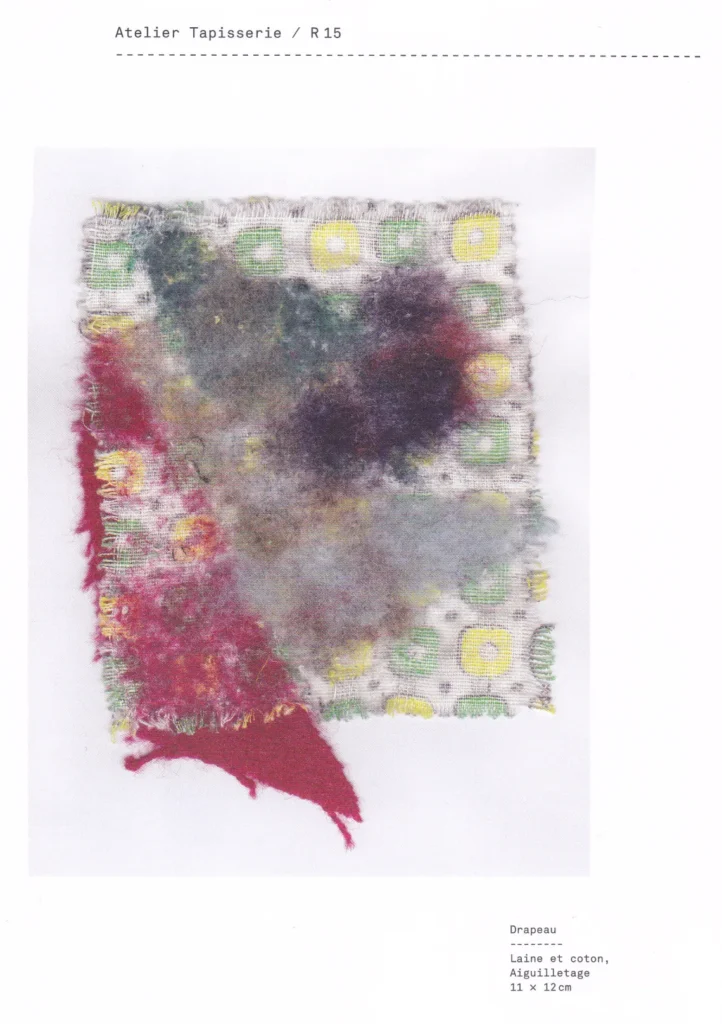
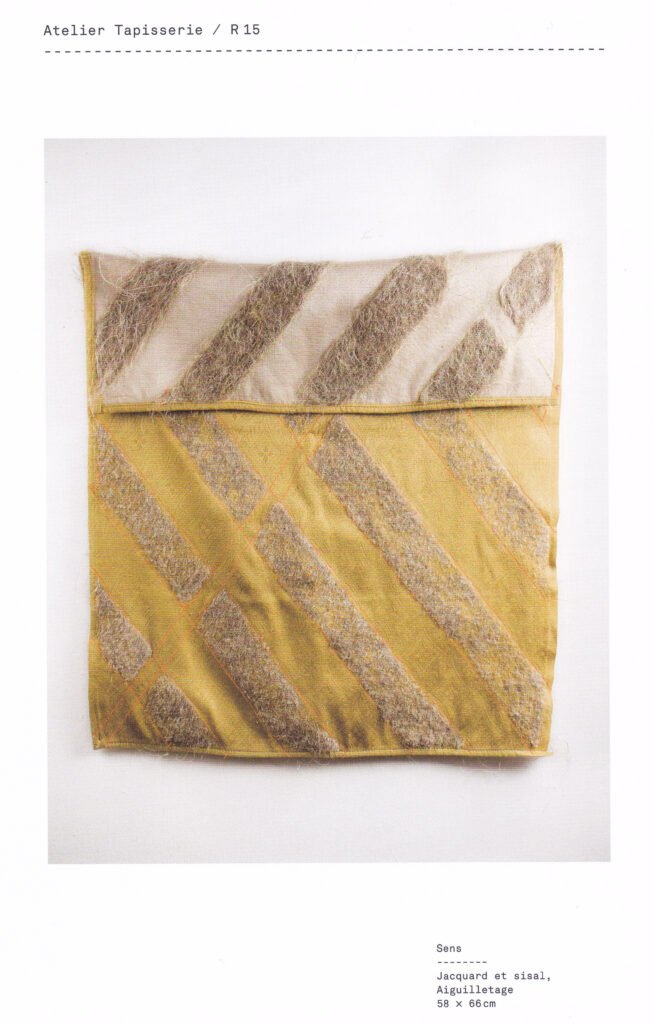
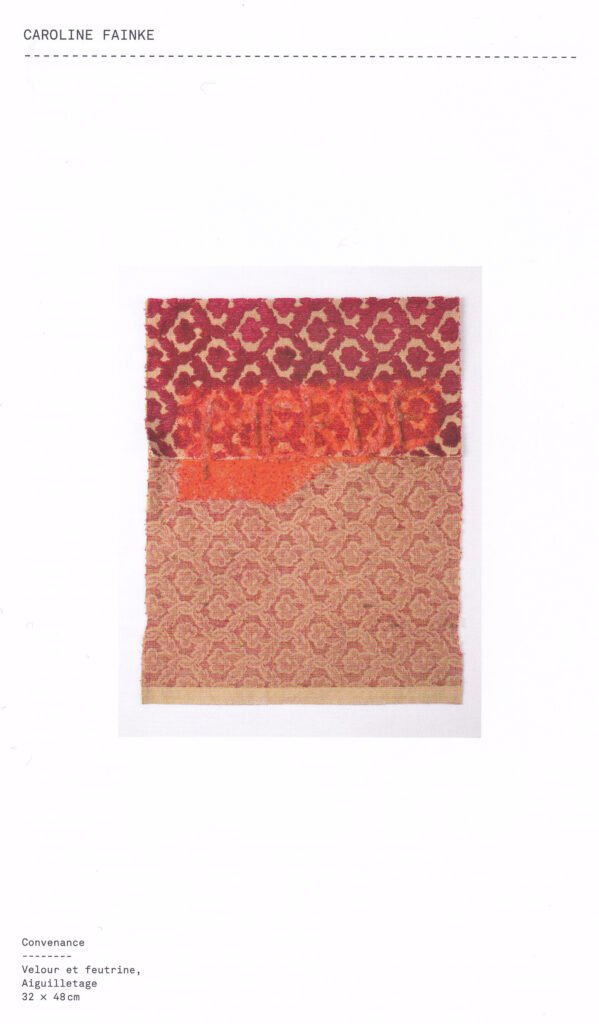
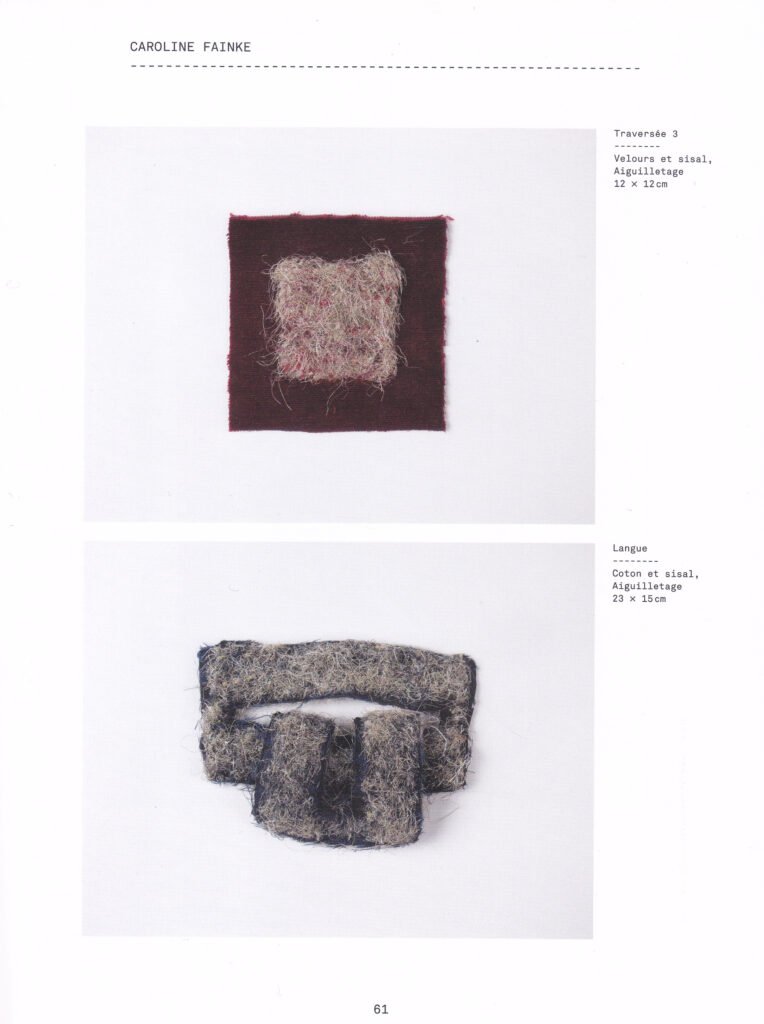
Caroline Faïnke announces it from the outset: her work speaks of the inside and the outside. She explores these notions intimately linked to textiles and appearance. She grasps their multiple material and immaterial perspectives. Thus, there are certainly three ways to interpret the inside and the outside in Caroline Faïnke’s art: a technical, an existential, and a political reading, each feeding into the others.
The technical reading.
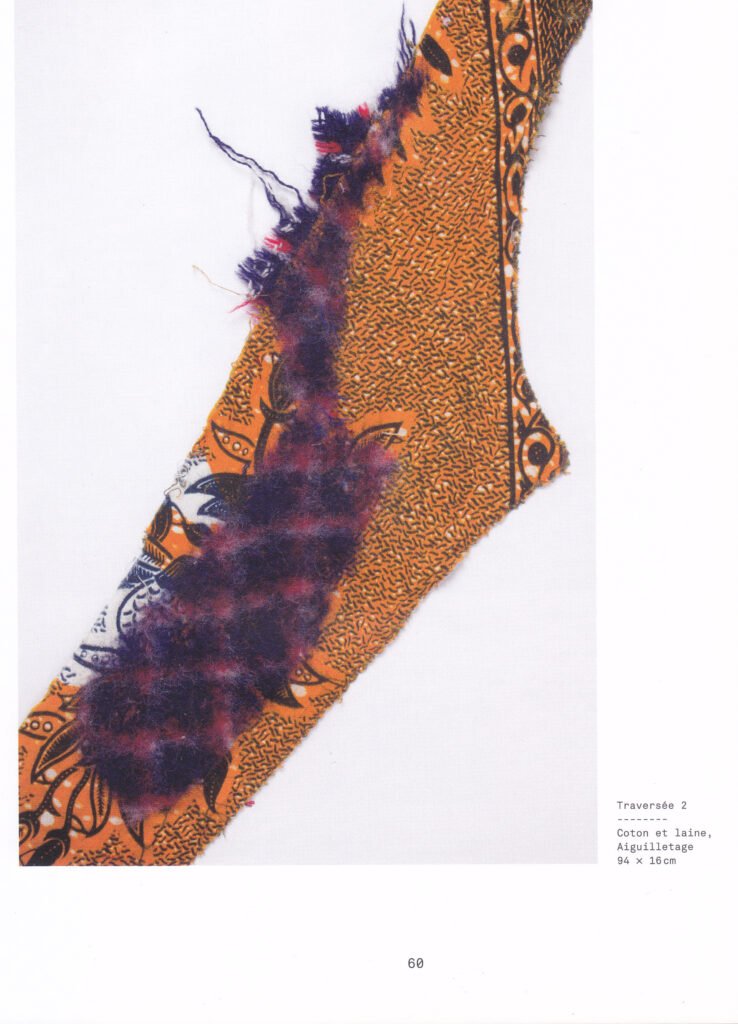
During her residency in Tournai, the artist became interested in needle punching. This involves inserting fibers into others using a serrated needle that is repeatedly passed through two materials. Here, an initial encounter of opposites takes place: the artist selects fabrics of contrasting quality, origin, and symbolism, such as Jacquard and Sisal, and it is through her repeated gesture that she hybridizes them, that she rebalances them. It’s a bit like acupuncture applied to a vast multicultural body, seeking to establish its unity in diversity, even contradiction. Or a reminiscence of an ancient healing ritual in which needles were used to balance invisible forces.
The Existential Reading.
The practice of sewing is constantly linked to what goes on behind the scenes. Theater, fashion, cinema: we are dealing with the activity of anonymous hands working to bring others into the light. In her varied professional career, the artist has experienced this ambivalence firsthand, which has further justified her interest in it from a poetic perspective. What is visible is supported by what is hidden. An embroidered motif is held together on the front by the tangled threads of its reverse. Value is linked to what is disregarded. Chaos and order are two sides of the same coin.
The Political Reading.
As an inhabitant of Édouard Glissant’s “Tout-monde” (Whole World), Caroline Faïnke evokes the stimulating yet also violent confrontations we witness today. Social confrontations: portraits of unsung heroes, the secret guardians of society, appear in her works. Technological confrontations: these are creations where tradition blends with modernity, where the hand engages in dialogue with the machine. Ecological confrontations, finally : Caroline Faïnke’s pieces incorporate recycled materials. They echo initiatives that strive to integrate human production into a continuous cycle where materials and gestures are subtly combined. »
Yoann Van Parys
Caroline Faïnke
Textile Artist & Costume Designer
Caroline Faïnke
Textile Artist & Costume Designer